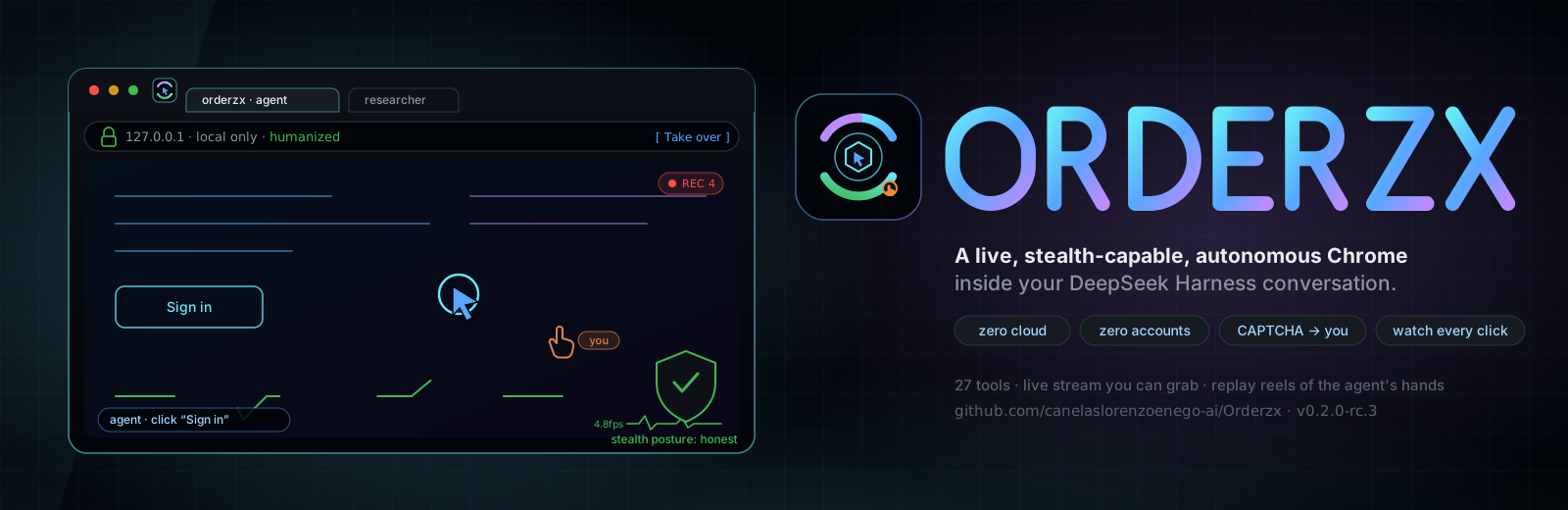
Stealth that tells the truth
Patchright by default — patched CDP, isolated-world evals, no webdriver tell. And posture() reports exactly which protections are live and which gaps remain, per engine.
CAPTCHA handoff, not CAPTCHA breaking
When a challenge appears the agent pauses and hands the widget to you — in-session, with your fingerprint and IP. The one solve method that always works, and always should.
A live stream you can grab
Tiered transport: on-demand screenshots, CDP screencast when flagged, DOM fallback. Gesture channel paints the agent's cursor, ripples and swipes — then Take over flips every tool to pointer-owned.
Eyes the model can point at
browser_see numbers every interactive element on the screenshot (set-of-marks) and flashes the overlay on your stream. mark: 7 works as a ref alias — and dies with the refs on navigation.
Self-healing refs
A re-rendered page shouldn't cost a full re-observe. Dead refs re-snapshot once and heal onto a unique role+name match — announced on the timeline. Two matches? Fails loudly. Never guesses.
Cookies without the leak
browser_cookies lists metadata only. Values are credentials, stripped at the engine boundary — a transcript can never become a credential dump.
Desktop view, done properly
Chrome-for-Android's "Request desktop site" for agents: UA string, UA client hints and touch emulation swapped in all three places sites check — every tab, including ones opened later.
Sub-agent browsers
browser_start({ label: "researcher" }) — one custom tab per session in the panel: origin avatar, live-phase pulse, desktop badge, an × that closes just that browser. Parallel by design.
Demonstrate once, replay by name
Take over, show the flow, stop — saved as plain-JSON browser_workflow steps. Replay matches identity first, coordinates second, humanized always — foreground or as a cancellable browser_task job. Password-shaped fields become {{variables}}: secrets never touch disk.
An MCP bridge, no new surface
dsh-browser-mcp speaks stdio JSON-RPC over the exact plugin tool layer — any MCP client can drive it. Zero tools added, zero policies relaxed; with no panel to hand off to, a blocking challenge is reported, never silently solved.
A debug drawer that admits its gaps
Arm the opt-in console+network tap and the panel renders both feeds live. While armed, the posture says so plainly — extra listeners are a detectable surface, and you chose it with eyes open. Disarm and the buffers wipe.
A monitor that tells the story
The chatbar glyph runs a ceremony per boot step — scanline, warming pips, shield draw-on, signal bars — then a live EKG when frames arrive. Status you can read at a glance, from across the room.